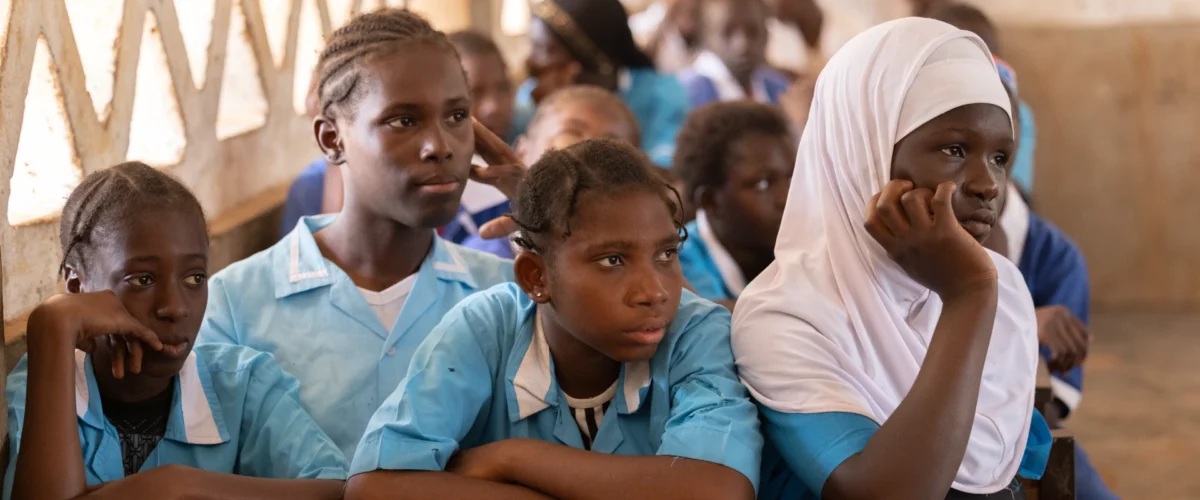
The Gambia: Evaluation of the Zero Out-of-School Children Project
Donor: UNICEF
Timeframe: November 2025-June 2026
“Zero Out-of-School Children in The Gambia” (2022–2025) was a nationwide UNICEF-led initiative, implemented with the Ministry of Basic and Secondary Education (MoBSE), ChildFund-The Gambia, and Education for All Campaign Network the Gambia (EFANet)and supported by Education Above All, that aimed to enroll 66,765 out-of-school children—including girls and children with disabilities—into formal and alternative education pathways across all seven regions of the country.
As a flagship component of UNICEF’s Country Program, the project advanced SDG 4 by strengthening education systems, improving data and information management, and promoting inclusive, rights-based approaches that benefit both direct learners and more than 510,000 indirect beneficiaries’ and Center for Research Policy Development (CRPD) will evaluate the project to identify lessons learned regarding what worked, what did not, and document good practices that can be replicated and scaled.
Actionable recommendations to inform future strategies and policies to achieve the goal of ensuring access to quality education for all children in The Gambia. The evaluation will use a phased, mixed-methods approach that includes an inception phase with stakeholder engagement, desk review, tool development, sampling design, and ethical clearance, followed by nationwide quantitative and qualitative data collection with strong quality assurance. Findings will be analyzed through a gender, equity, and human rights lens and disseminated through a validated final report, presentations, and accessible briefs to support evidence-based decision-making.
Project Highlights
- Conducting a phased mixed-methods evaluation combining surveys, KIIs, FGDs, and Most Significant Change techniques, with strong quality assurance and adherence to UNICEF ethical standards.
- Establishment of an Evaluation Reference Group and a participatory validation process ensures relevance, credibility, and alignment with national and community priorities.
- Development of recommendations and accessible products (report, briefs, infographics, datasets) grounded in a gender, equity, and human rights lens to inform policy and programming.